
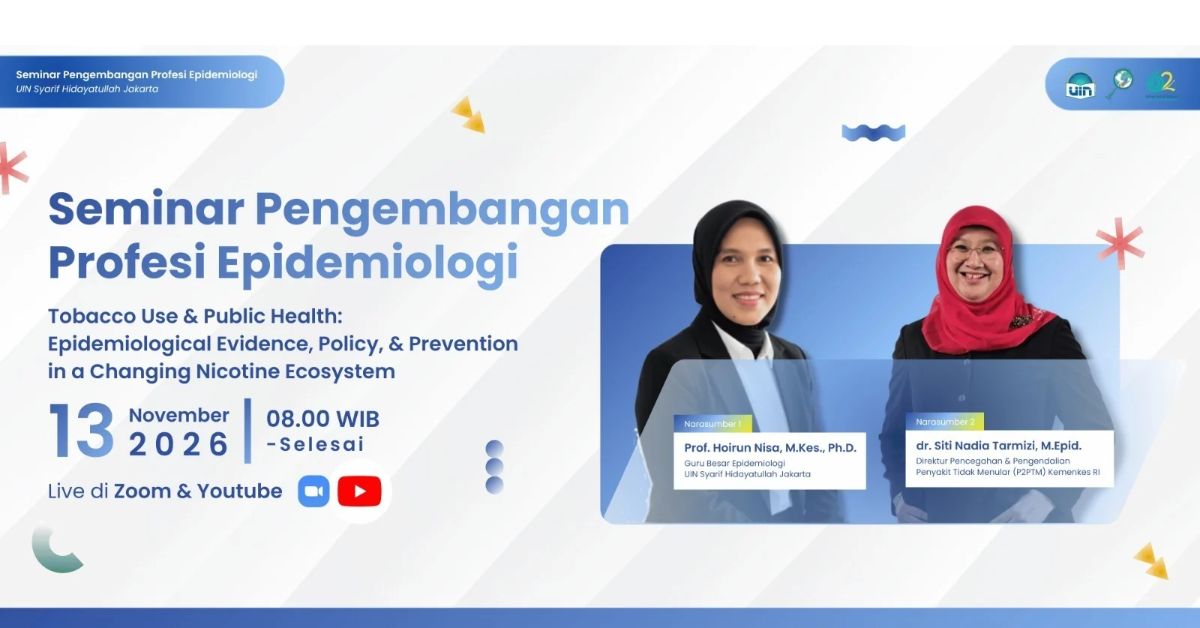
2026 Epidemiology Professional Development Seminar: Determinants of Smoking Behavior and Regulations for the Control of Conventional and Electronic Cigarettes
FIKES Online News – The 2026 Epidemiology Professional Development Seminar (Semprof) was held on Friday (November 13, 2026) via Zoom Meeting and a live YouTube broadcast. The event, which took place from 07:30 to 11:30 WIB, featured academics and health practitioners who discussed issues surrounding tobacco and nicotine use, as well as the challenges involved in controlling them in Indonesia.
Organized by 7th-semester students specializing in Epidemiology, the seminar was designed to enhance career readiness, provide insight into the professional landscape, and cover the ethics and regulations governing the field, in preparation for the students' upcoming graduation as Bachelors of Public Health (S.K.M.).
The theme for this event is "Tobacco Use and Public Health: Epidemiological Evidence, Policy, and Prevention in a Changing Nicotine Ecosystem." The seminar serves as a platform to broaden public understanding and knowledge regarding the impact of tobacco and nicotine use on public health. The discussion extends beyond conventional cigarettes to include the emergence of alternative nicotine products—such as electronic cigarettes (vapes), heated tobacco products, and nicotine pouches—which are increasingly relevant to tobacco control efforts.
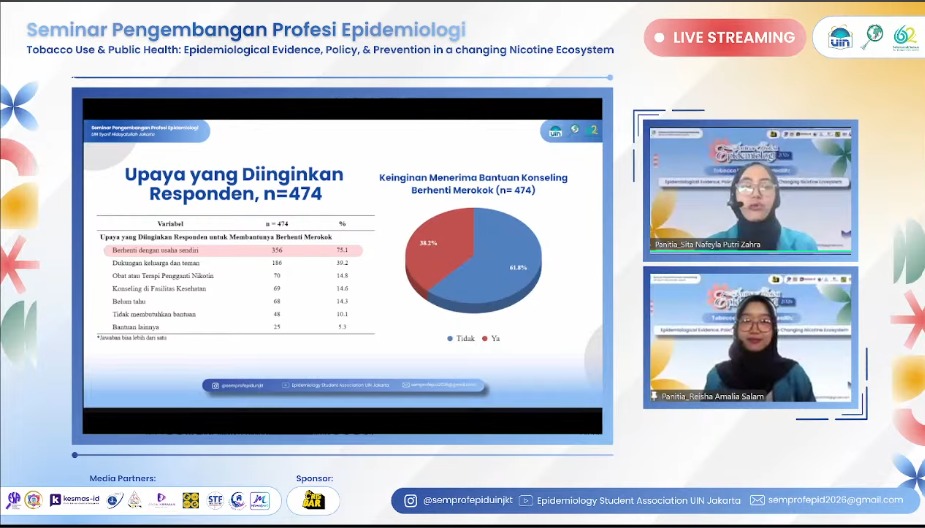
Prior to the seminar, epidemiology students from the class of 2026 conducted research on the smoking behaviors of students at UIN Syarif Hidayatullah Jakarta. Based on a study of 513 students, 85.9% of respondents were smokers, 10% were former smokers, and 4.2% were non-smokers. Among the 474 respondents who smoke, 52.5% use tobacco cigarettes, 10.1% use vapes, and 37.3% use both. The research findings also indicate that curiosity was the primary reason for trying smoking for the first time, while one's social circle was identified as a factor that encourages such behavior.
These findings indicate that smoking among university students remains an issue requiring attention, particularly concerning nicotine dependence and efforts toward smoking cessation.
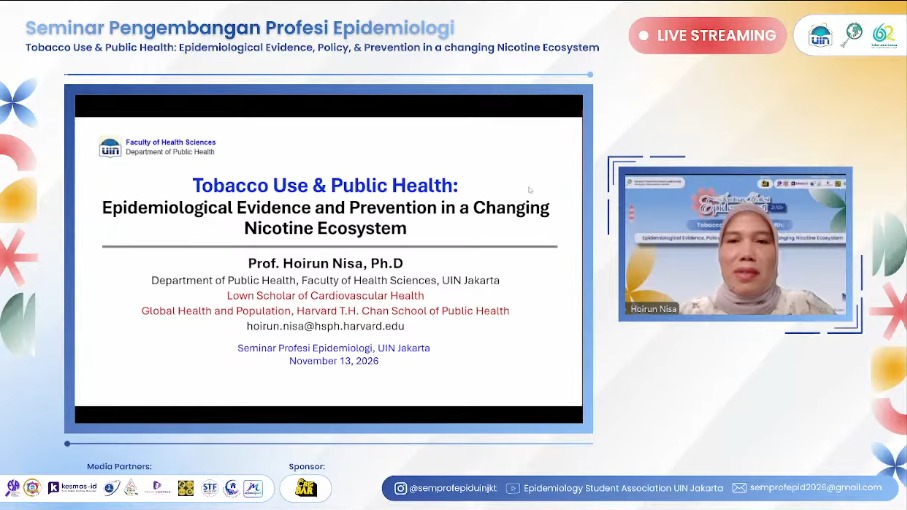
The seminar was moderated by Muhamad Taufik, S.K.M., and featured Prof. Hoirun Nisa, M.Kes., Ph.D.—a professor in the Public Health Study Program at the Faculty of Health Sciences (FIKES), UIN Jakarta—who presented on the topic, "Tobacco Use and Public Health: Epidemiological Evidence and Prevention in a Changing Nicotine Ecosystem." She discussed the evolution of tobacco and nicotine use, particularly through new products such as vapes and nicotine pouches. She highlighted the risks of nicotine dependence—especially among adolescents—as well as the influence of social environments and marketing in driving the use of these products.
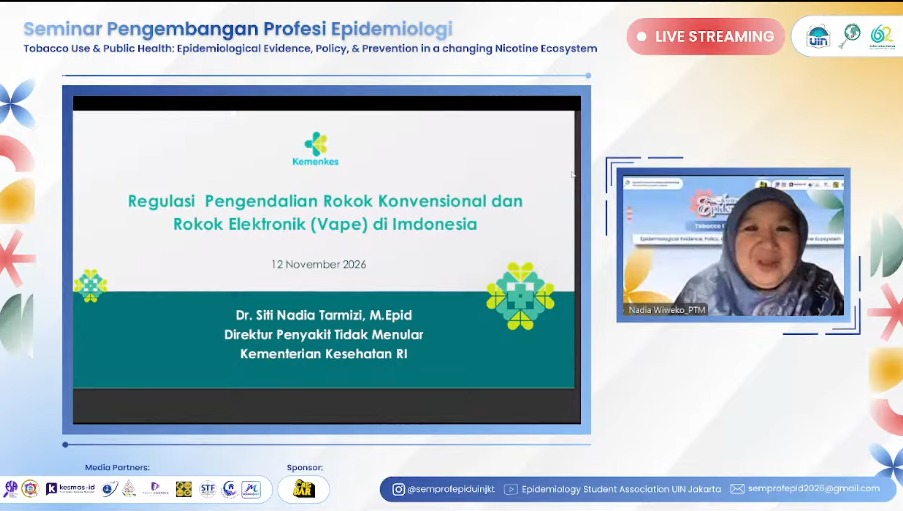
Following this, Dr. Siti Nadia Tarmizi, M.Epid., Director of Non-Communicable Disease (NCD) Prevention and Control at the Indonesian Ministry of Health, addressed the regulation of conventional cigarettes and electronic cigarettes (vapes) in Indonesia. Dr. Nadia discussed the control of both conventional and electronic cigarettes through health policies, including the regulations stipulated in Government Regulation (PP) Number 28 of 2024. She also drew attention to how the marketing of vapes appeals to young people, and emphasized the importance of strengthening the implementation of Smoke-Free Areas (KTR) through stricter oversight, limitations on sales and promotions, and the rejection of sponsorships from the tobacco industry. Furthermore, she noted that these control efforts must be supported by smoking cessation services, including counseling and medical therapy.
Throughout the session, the participants’ enthusiasm was evident during the ice-breaking activities and the Q&A segment with the two speakers. A wide range of questions were raised, covering topics such as the impact of nicotine dependence on adolescent brain development, the correlation between household spending on cigarettes and children’s nutritional intake, and the challenges involved in enforcing tobacco control regulations and monitoring tobacco advertising on social media. The discussion also explored therapeutic options to help smokers overcome nicotine dependence, as well as government efforts to regulate alternative nicotine products—ensuring they do not lead to the emergence of new users, particularly among the youth.
This seminar is intended to foster a more comprehensive understanding of the impacts of tobacco and nicotine use, the evolution of tobacco control policies in Indonesia, and effective prevention strategies that can be implemented within the community. Furthermore, it aims to strengthen the role of students and healthcare practitioners in supporting tobacco and nicotine control initiatives, ultimately contributing to the creation of a healthier environment. (Semprof Epid 2026)