
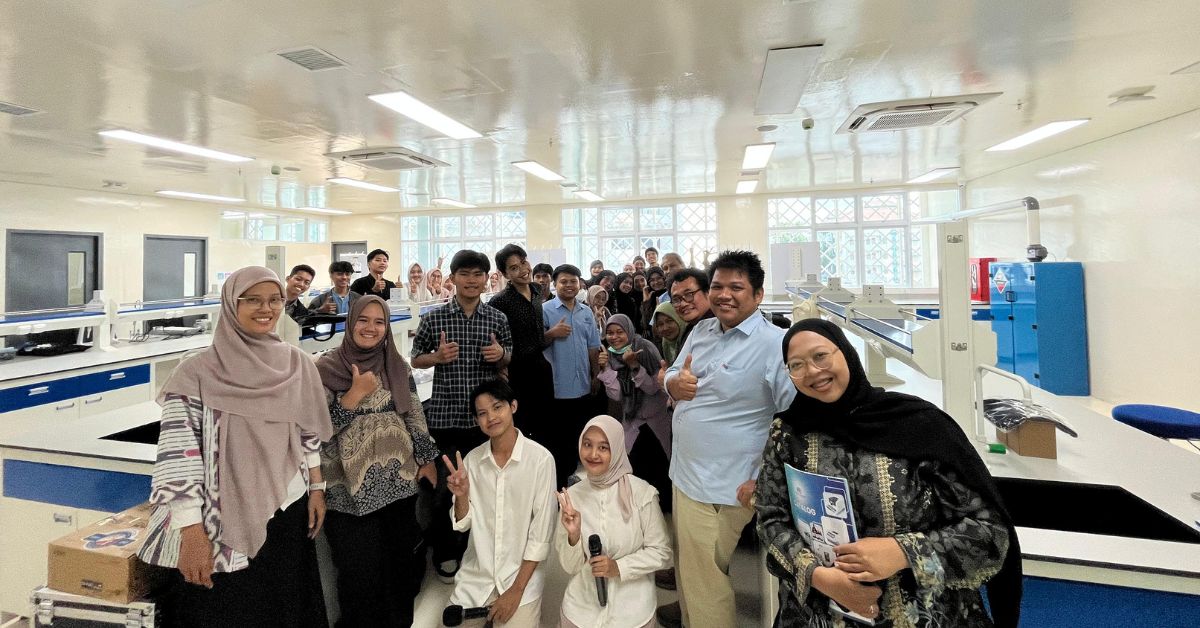
FIKES UIN Jakarta Holds "Hands-On Rotary Evaporator: From Extracts to Active Compounds" Workshop
Ciputat, FIKES Online News – The Faculty of Health Sciences (Fikes) of UIN Jakarta successfully held a rotary evaporator workshop with the theme: "HANDS-ON ROTARY EVAPORATOR, From Extracts to Active Compounds." This event was aimed at research students and was open to the public to equip participants with the knowledge of how to use the equipment before entering the laboratory. Tuesday (January 27, 2026).
The workshop, which took place on the 3rd floor of the New Building Research Laboratory, was attended by 35 participants, consisting of students, lecturers, and laboratory assistants.
The event began with a presentation on the introduction of the equipment and its working principles by Vivi Anggia, M.Farm., Apt., a lecturer in Pharmacy at FIKES UIN Jakarta. In her presentation, Vivi explained that the Rotary Evaporator is an essential laboratory instrument for separating solvents from liquid samples through the evaporation process. This tool is highly efficient because it can operate under low pressure, thereby drastically lowering the boiling point of the liquid. Scientifically, the operation of the rotary evaporator is based on the physical law of boiling point depression. boiling and even heat distribution.
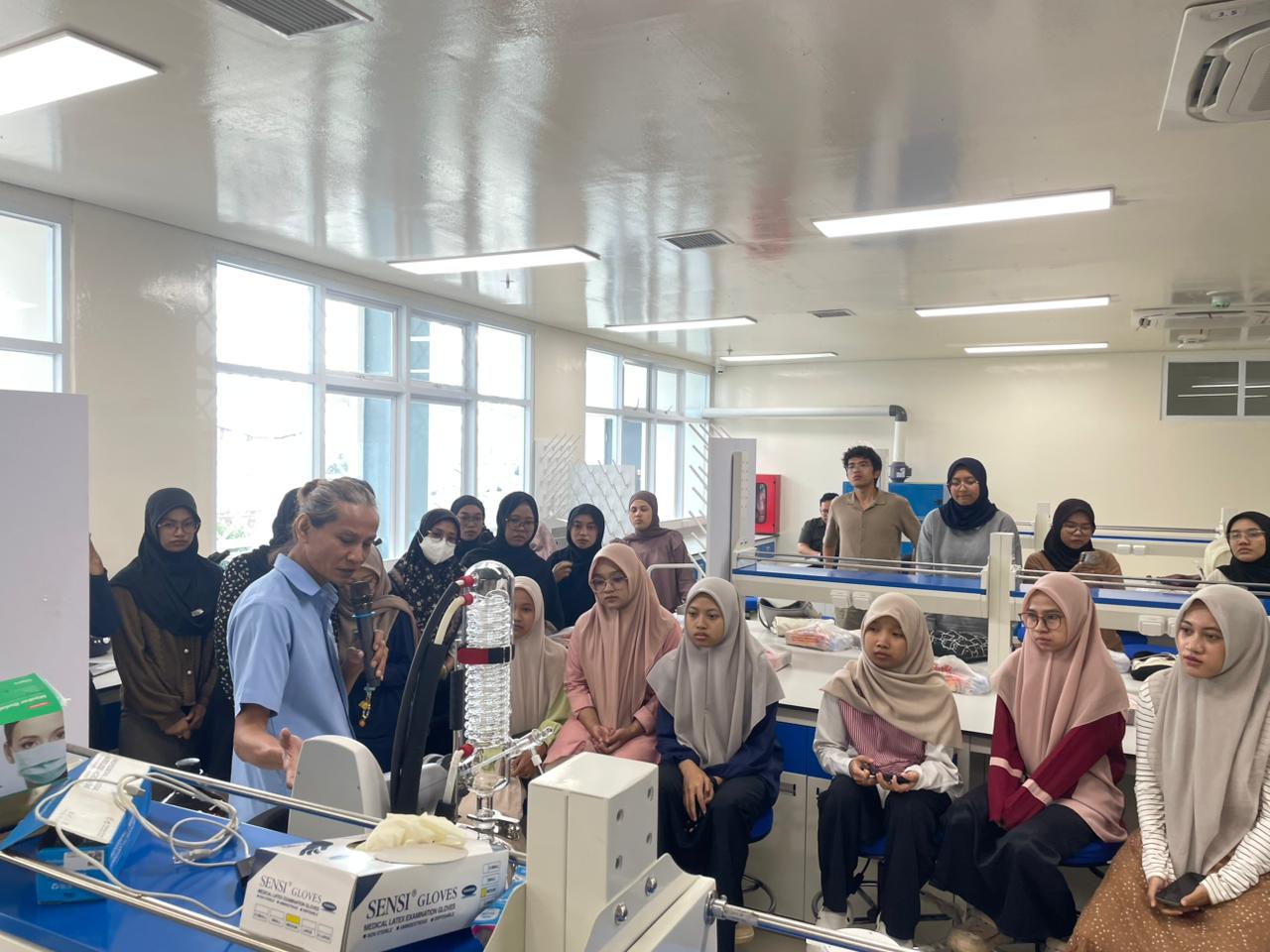
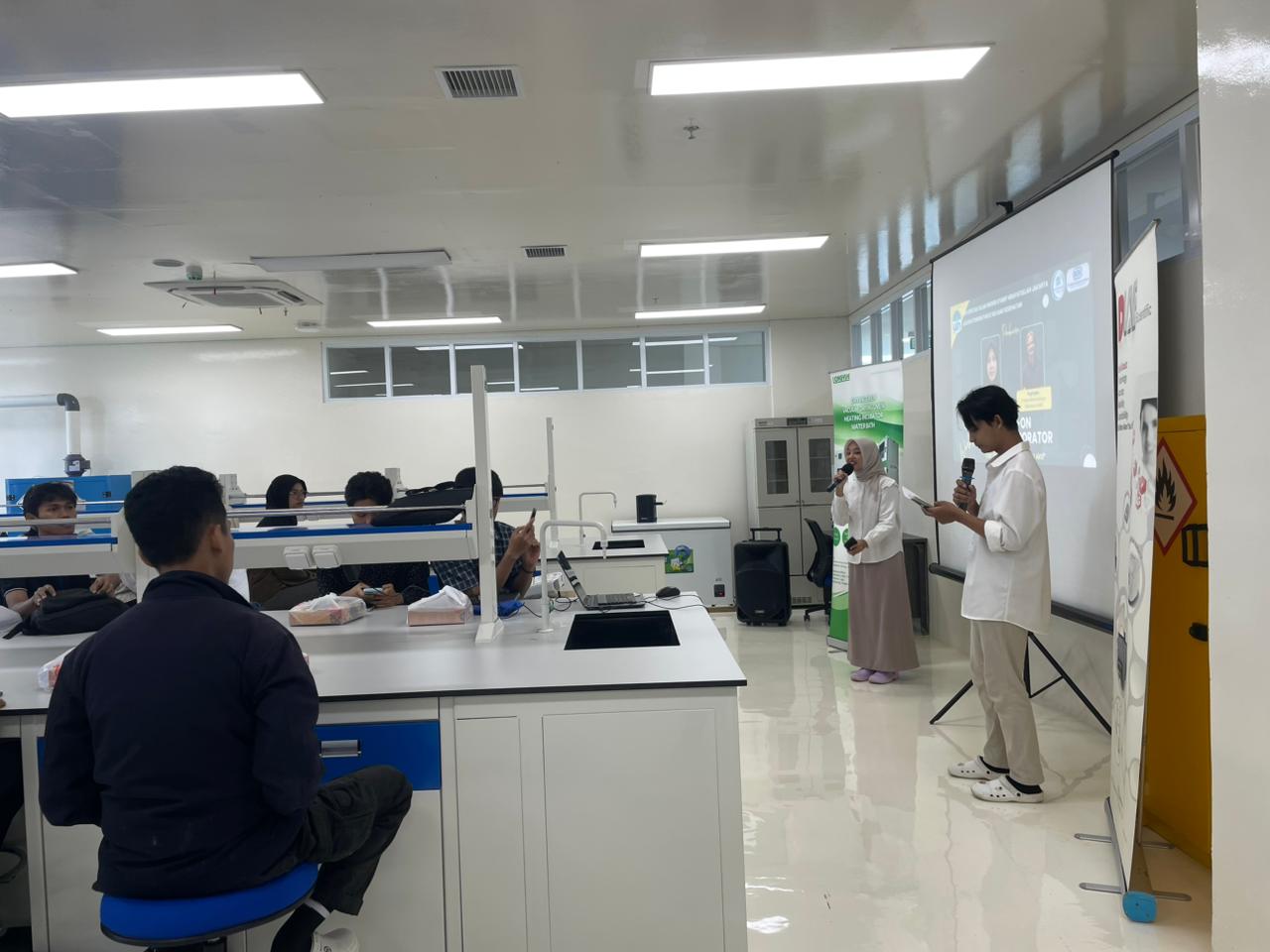
Following the first session's presentation, the event continued with a presentation by Mr. Suprapto from PT. Murni Dharma Karya (DLAB Distributor). Suprapto emphasized that evaporation efficiency depends not only on thermal temperature but also on the balance between vacuum pressure, rotational speed, and the condensation temperature difference. This technical narrative aimed to provide participants with a thorough understanding before they directly touched the device.
During the practical phase, participants were able to observe a live simulation of the separation of ethanol solvent from cherry leaf macerate. Suprapto and his team operated the equipment while explaining how it worked and the correct procedures for using it.
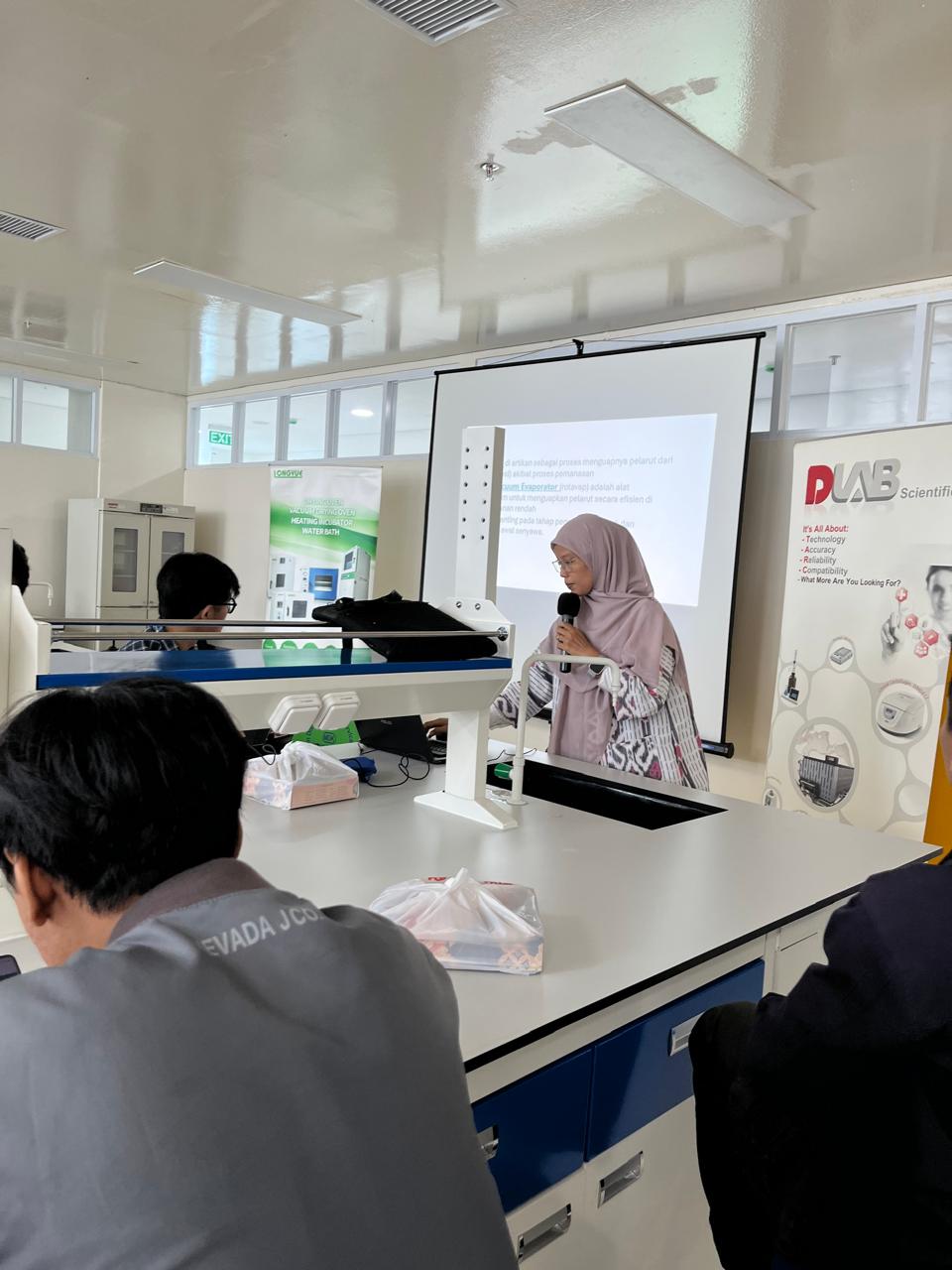
Overall, the workshop was interactive. Participants not only learned how to operate the equipment but also developed basic skills for performing minor troubleshooting if problems arose during use.
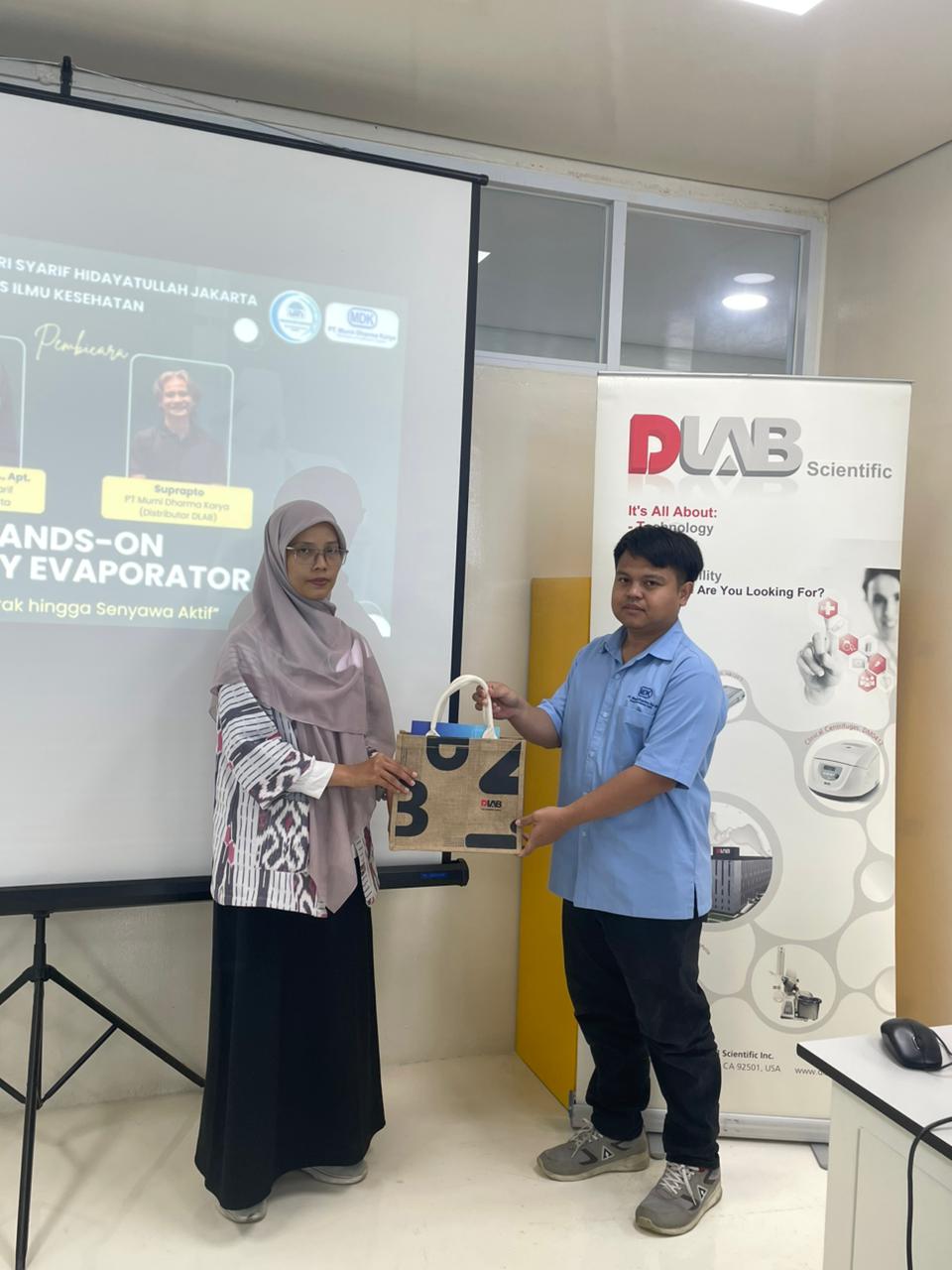
The event concluded with door prizes awarded to participants who asked questions and answered them correctly, followed by a group photo session. (SY)