
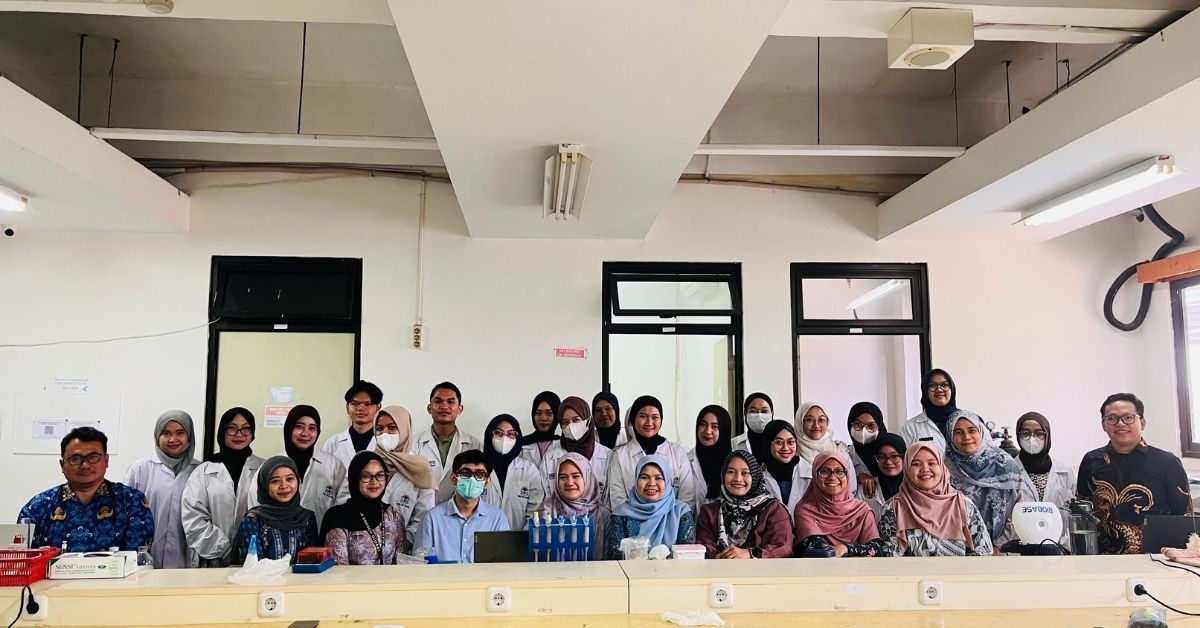
FIKES UIN Jakarta Holds Molecular Technique Workshop for Halal Testing, Participants Gain Hands-on Experience in Pork DNA Detection Using Mini PCR
Ciputat, FIKES Online News – The Faculty of Health Sciences (FIKES) at UIN Syarif Hidayatullah Jakarta once again demonstrated its commitment to enhancing academic competence and laboratory skills through the organization of the Workshop & Handling Molecular Technique for Halal Testing: Pork DNA Detection Using Mini PCR & Electrophoresis. Held at the PHA Laboratory (Halal Analysis of Drug, Food & Cosmetics Laboratory) on the 3rd Floor of the FKIK Building, UIN Syarif Hidayatullah Jakarta, on Thursday (September 3, 2026), the event attracted enthusiastic participation from lecturers and students alike.
The workshop was designed to provide participants with both theoretical understanding and practical experience in applying molecular biology techniques for halal testing, particularly in the detection of pork DNA in food, pharmaceutical, and cosmetic products.
The event was conducted in an interactive and application-oriented format. In addition to receiving theoretical instruction, participants had the opportunity to engage in hands-on laboratory practice using Mini Polymerase Chain Reaction (Mini PCR) equipment and electrophoresis techniques, both of which play crucial roles in modern molecular analysis.
Participants included lecturers from the Pharmacy Study Program, fifth- and seventh-semester Pharmacy students, as well as students currently conducting research projects. This diverse composition of participants enriched the discussions, allowing the workshop content to be connected with classroom learning, scientific research, and laboratory applications in halal analysis.
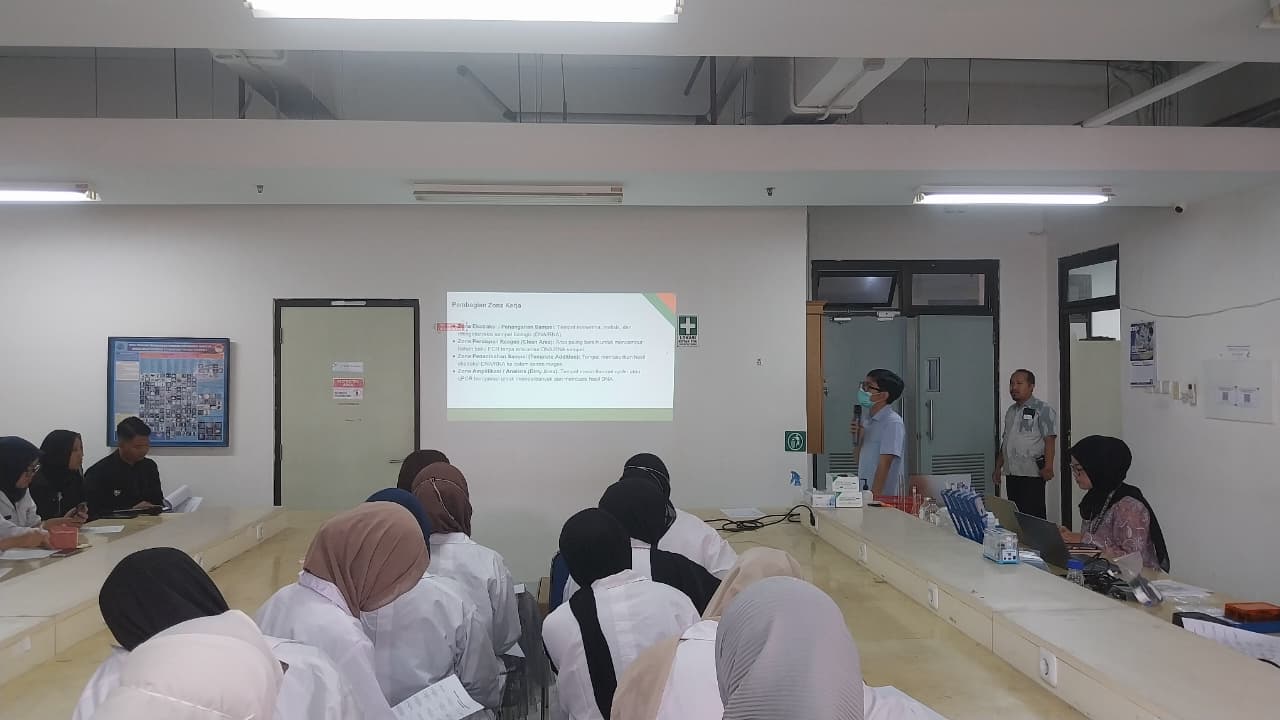
During the first session, Muhamad Abdul Aziz, S.Si., from PT Plasma Unitech Global, delivered a presentation on the practical application of Mini PCR and electrophoresis for pork DNA detection. Participants were introduced to the complete workflow, from sample preparation and DNA amplification using Mini PCR to the interpretation of results through electrophoresis analysis.
Following the presentation, the workshop continued with a hands-on training session, enabling participants to directly operate the equipment and perform the testing procedures themselves. Through this practical experience, participants gained a deeper understanding of molecular analysis techniques that are often studied theoretically in academic settings.
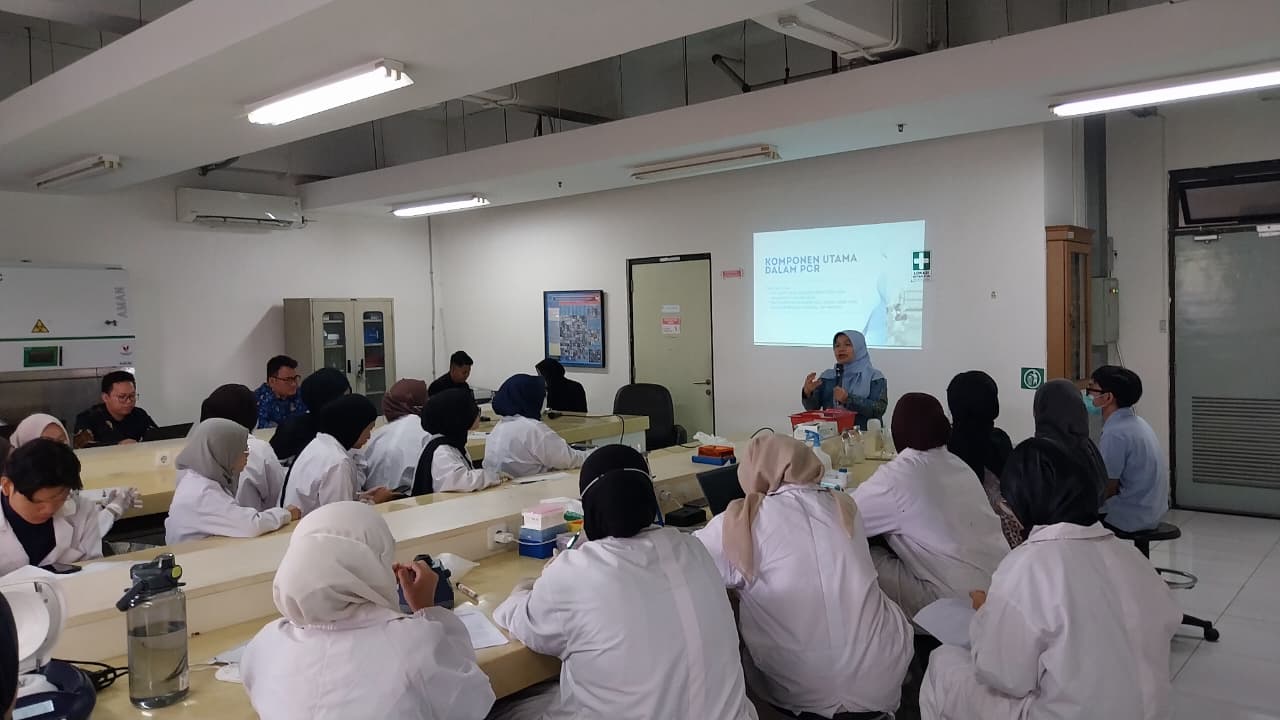
Meanwhile, the second speaker, Prof. Dr. apt. Zilhadia, M.Si., Dean of the Faculty of Health Sciences, delivered a presentation entitled “PCR in Halal Testing: Principles, Roles, Interpretation, and Applications for Pork DNA Detection.” In her presentation, she explained that Polymerase Chain Reaction (PCR) is a laboratory technique used to amplify specific DNA segments in large quantities, allowing them to be analyzed more effectively and accurately.
Prof. Zilhadia also reviewed the historical development of PCR technology, which was first developed by Nobel Prize-winning scientist Kary Mullis in 1983. Today, PCR has become one of the most essential tools in molecular biology due to its high sensitivity and specificity in detecting the genetic material of organisms, including pork DNA as an indicator in halal testing.
According to Prof. Zilhadia, PCR technology plays a strategic role in supporting halal assurance systems. Through DNA analysis, traces of contamination or ingredients derived from pork can be accurately detected, even when present in very small quantities. Consequently, PCR-based methods are widely employed by halal testing laboratories to support product verification and regulatory monitoring.
Throughout the workshop, participants actively engaged in discussions and question-and-answer sessions. Their enthusiasm was evident in the wide range of questions raised regarding PCR principles, data interpretation, and the broader application of molecular techniques in laboratory analysis and halal research. The interactive exchanges between speakers and participants created a dynamic and inspiring learning environment.
Through this workshop, participants were expected not only to understand the fundamental concepts of molecular techniques but also to apply them in academic, research, and laboratory settings. For students, the activity served as a valuable bridge between classroom theory and real-world laboratory practice. For lecturers and student researchers, it provided additional insights into the development of molecular-based analytical methods and research approaches that are increasingly relevant to the growing halal industry.
Overall, the Workshop & Handling Molecular Technique for Halal Testing: Pork DNA Detection Using Mini PCR & Electrophoresis was successfully conducted and received highly positive feedback from participants. The event reflected the commitment of the Faculty of Health Sciences, UIN Syarif Hidayatullah Jakarta, to strengthening human resource capacity, enhancing laboratory capabilities, and advancing pharmaceutical sciences and halal analysis through the application of molecular technology to meet the evolving demands of science and the halal industry. (ZR)