
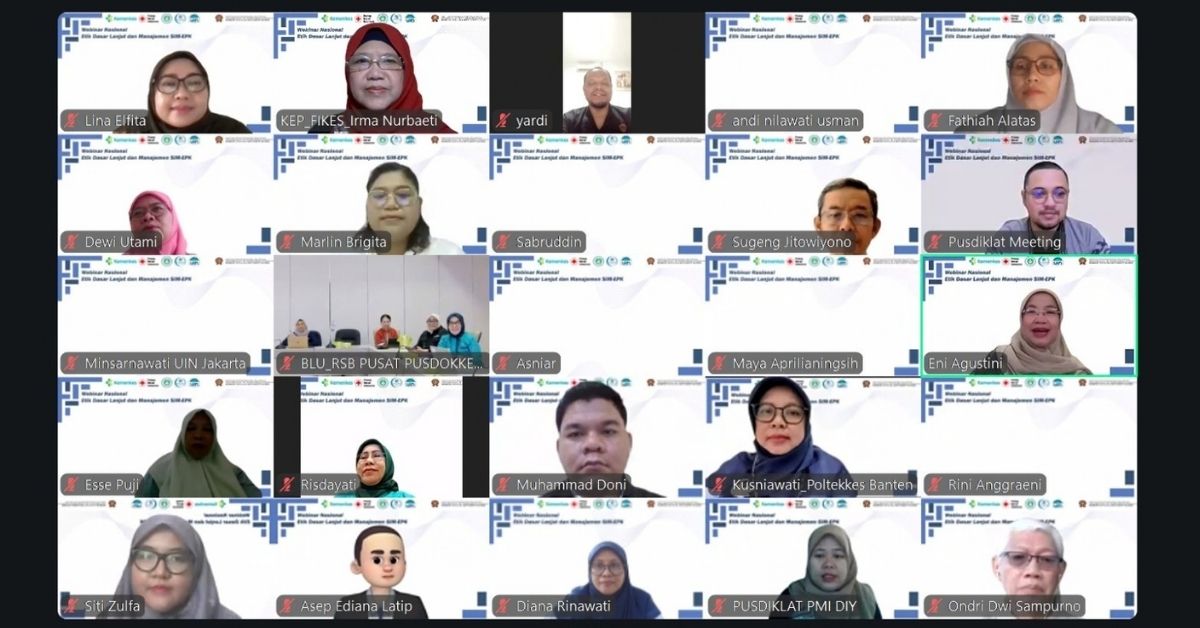
FIKES UIN Jakarta Strengthens Research Ethics Capacity Through the Advanced Basic Ethics and SIM-EPK Management National Webinar
The webinar was organized through a collaboration between the Health Research Ethics Committee (KEPK) of FIKES UIN Syarif Hidayatullah Jakarta, the Education and Training Center of the Indonesian Red Cross, Special Region of Yogyakarta, Edutechno IAPKY, and other institutional partners. The program was also integrated into the Indonesian Ministry of Health’s learning ecosystem through the Ministry of Health Learning Management System (LMS). This collaboration further strengthened the event's position as a national forum that brought together academics, practitioners, researchers, reviewers, clinicians, and KEPK administrators from across Indonesia.
Participants came from a wide range of institutions, including UIN Syarif Hidayatullah Jakarta, Hasanuddin University, Muhammadiyah University of Metro, Andalas University, Muslim University of Indonesia, Syiah Kuala University, UHAMKA, Makassar College of Health Sciences, and Poltekkes Kemenkes Banten. Representatives from healthcare institutions also attended, including personnel from Bhayangkara Level I Hospital of the National Police Medical Center, UPTD Khusus RSU Haji Medan, and Tenriawaru Regional General Hospital. The diversity of institutional backgrounds and professional expertise made the webinar an ideal platform for learning and exchanging experiences regarding the implementation of health research ethics.
The event was officially opened by Prof. Dr. apt. Zilhadia, M.Si., Dean of FIKES UIN Jakarta, following a report from the organizing committee chair, Dr. apt. Lina Elfita, M.Si. The webinar was designed to enhance participants’ ability to understand research ethics principles, systematically review research protocols, and optimize the use of the Health Research Ethics Management Information System (SIM-EPK).
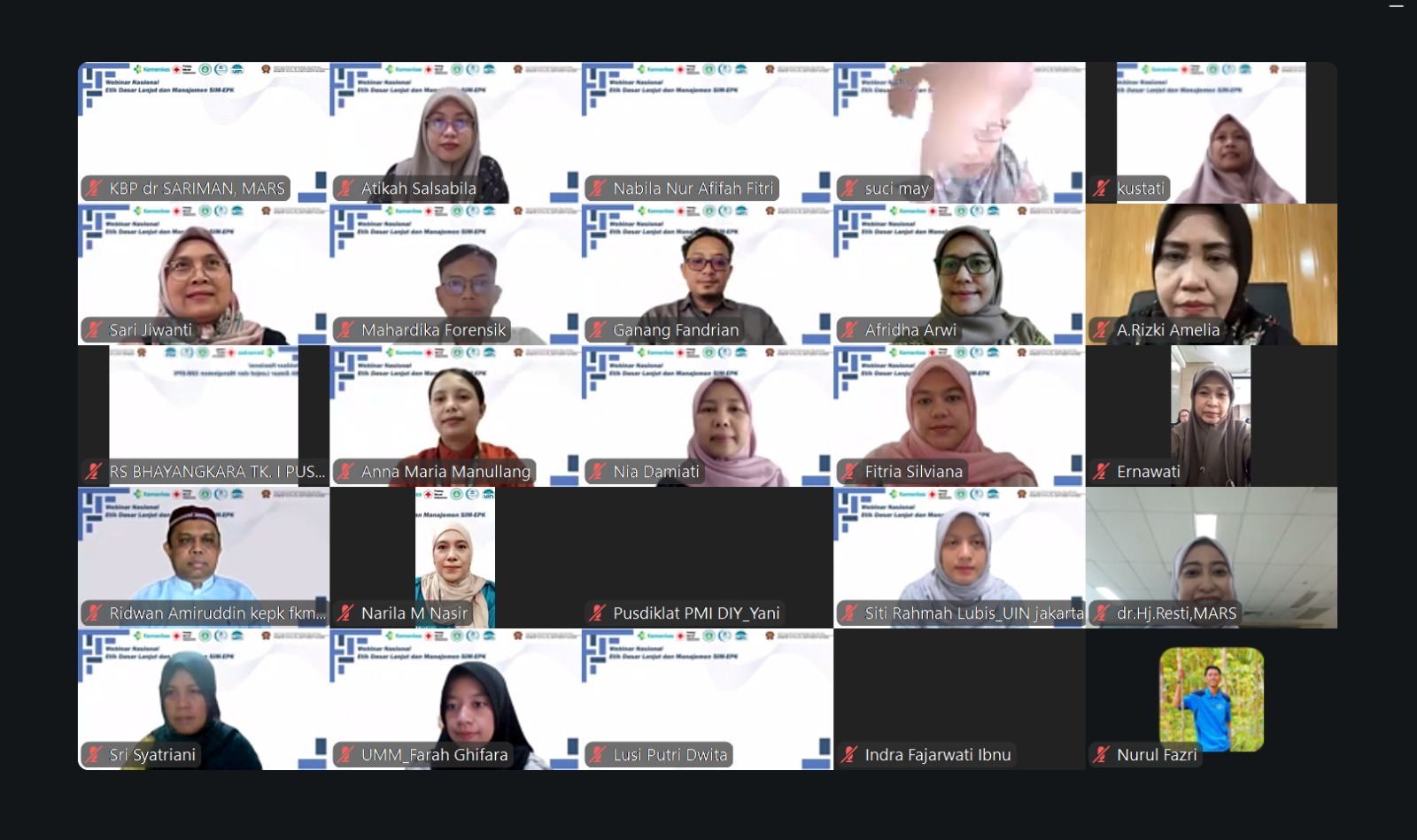
On the first day, participants received materials covering the historical development of health research ethics, the role of the National Health Research and Development Ethics Committee (KEPPKN), institutional standards for accredited KEPKs, and the three principles, seven standards, and twenty-five ethical guidelines governing research involving human subjects. The sessions continued with discussions on informed consent, health research ethics protocols, and introductory topics related to clinical trials, laboratory equipment, and laboratory management.
These presentations emphasized that protecting the rights, safety, dignity, and well-being of research participants must be embedded from the earliest stages of research planning. Ethics was framed not merely as an administrative requirement but as a fundamental principle that accompanies every phase of the research process.
On the second day, participants explored topics related to the ethical use of laboratory animals, the importance of ethics in health research, and the role of KEPKs in maintaining research quality and integrity. Subsequent sessions focused on the technical aspects of SIM-EPK utilization, including KEPK and researcher registration within KEPPKN and SIM-EPK, protocol submission procedures, completion of assessment instruments, and self-assessment based on ethical standards.
Participants were also introduced to the mechanisms for exempted, expedited, and full-board reviews within SIM-EPK. The learning process was further enriched by hands-on exercises in protocol review and the preparation of SIM-EPK data for accreditation requirements. This practical approach enabled participants not only to understand ethical concepts but also to apply ethical review workflows in a more operational, systematic, and well-documented manner.
Beyond expanding technical knowledge, the forum provided opportunities to strengthen networks among KEPKs and research institutions. Participants, who included lecturers, researchers, reviewers, ethics assessors, KEPK administrators, clinicians, research and development staff, and hospital management personnel, were able to share experiences regarding ethical challenges within their respective institutions. Such multidisciplinary interaction is essential for fostering a common understanding of ethical review standards and improving consistency in their implementation.
The webinar featured several distinguished speakers with extensive expertise in research ethics and KEPK management, including Drs. Ondri Dwi Sampurno, M.Si., Apt.; Prof. drg. Anton Rahardjo, M.K.M., Ph.D.; Drs. Harry Wahyu Tristantowibowo, Apt.; Prof. Irma Nurbaeti, S.Kp., M.Kep., Sp.Mat., Ph.D.; Drh. Idi Setiyobroto, M.Kes.; and Handoko Riwidikdo, S.Kp.
The strong involvement of the FIKES academic community was also evident throughout the event. In addition to serving as a speaker, Prof. Irma Nurbaeti was joined by several FIKES lecturers who acted as moderators, including apt. Yardi, Ph.D.; Nia Damiati, S.Kp., MSN., Ph.D.; Narila Mutia Nasir, SKM., MKM., Ph.D.; and Dewi Utami Iriani, M.Kes., Ph.D. The webinar was hosted by Ns. Eni Nur’aini Agustini, S.Kep., M.Sc., Ph.D.
The program was specifically designed to help participants understand the interconnected relationship between ethical principles, protocol quality, review processes, documentation practices, and KEPK accreditation within a unified governance framework. As a result, capacity building extended beyond conceptual understanding and focused on practical competencies that could be directly applied to ethical review services within participants’ institutions.
Through this initiative, FIKES UIN Jakarta continues to support the strengthening of a professional, standardized, transparent, and accountable health research ethics ecosystem. The utilization of SIM-EPK is expected not only to improve administrative efficiency but also to ensure that ethical review processes are conducted in a more systematic, well-documented, and accountable manner.
Ultimately, research ethics is far more than a process of obtaining ethical clearance. It represents a commitment to ensuring that scientific advancement progresses alongside respect for the dignity, rights, safety, and well-being of research participants. (MW)