
The National Seminar on Biostatistics Professional Development Discusses Strategies for Welcoming the Era of Population Aging
FIKES Online News—The National Seminar on Professional Development in Biostatistics, Population, and Health Informatics at UIN JAKARTA was held again on Wednesday, November 19, 2025, via Zoom Meeting and YouTube streaming. This year's seminar differed from previous years, highlighting the theme of population aging. The seminar and research, conducted by students majoring in Biostatistics, Population, and Health Informatics, highlighted patterns of population aging and health disparities among the elderly in various regions of Indonesia, based on several variables, referring to Dahlgreen's fan theory. These findings underpinned the need for serious discussion of the issue of population aging and the need for cross-sector collaboration.
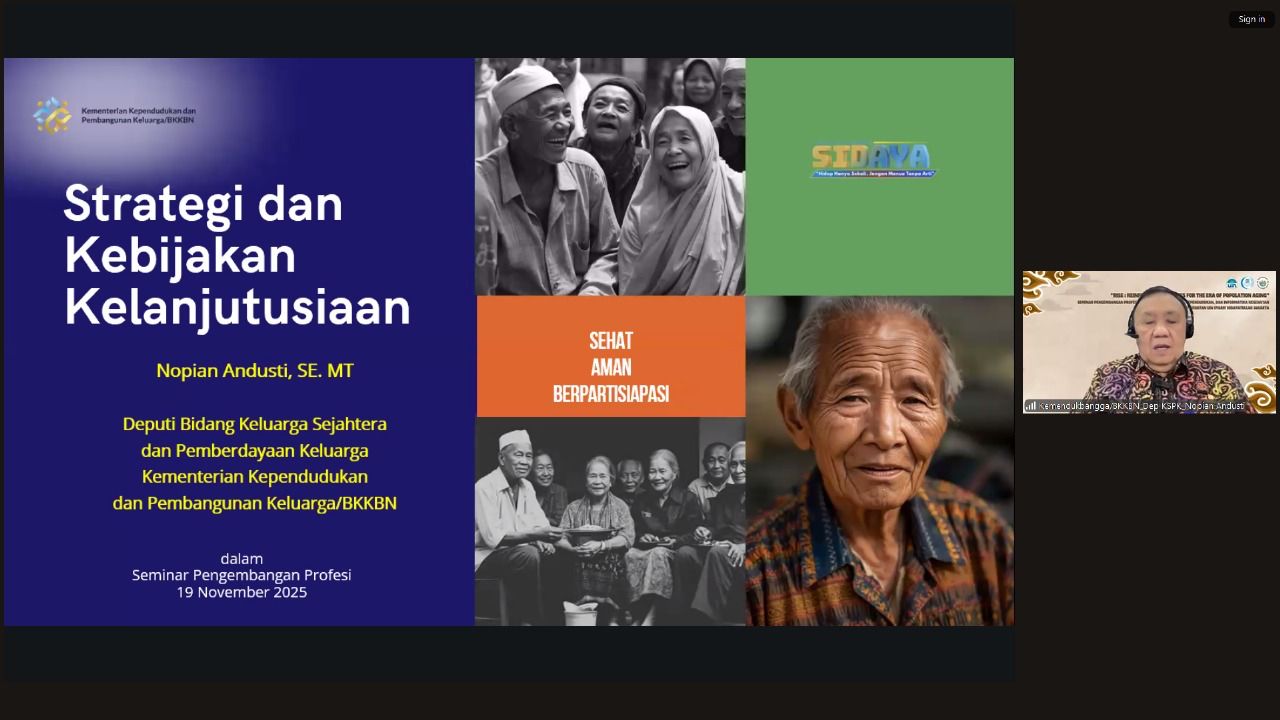
The event, organized by the Public Health study program at UIN Syarif Hidayatullah Jakarta, ran from 8:00 a.m. to 12:40 p.m. Western Indonesian Time. The seminar began with an official opening by the study program secretary and vice dean, who emphasized the importance of strengthening academic capacity and student contributions to population research. The seminar attracted more than 350 participants from diverse backgrounds and regions. High enthusiasm was evident from the first session, which featured keynote speaker Nopian Andusti, SE., MT, Deputy for Family Welfare and Family Empowerment, Ministry of Population and Family Development/BKKBN RI. He reminded that Indonesia is moving rapidly towards an aging society. Changes in family structure and increasing rates of loneliness among the elderly are new challenges that must be anticipated. He also highlighted the SIDAYA program, a family-based approach that encourages the elderly to remain healthy, active, and productive. In closing, he delivered a lasting message to the participants, namely "you only live once, don't grow old meaninglessly" as a reminder that the aging process must also be accompanied by a good quality of life.
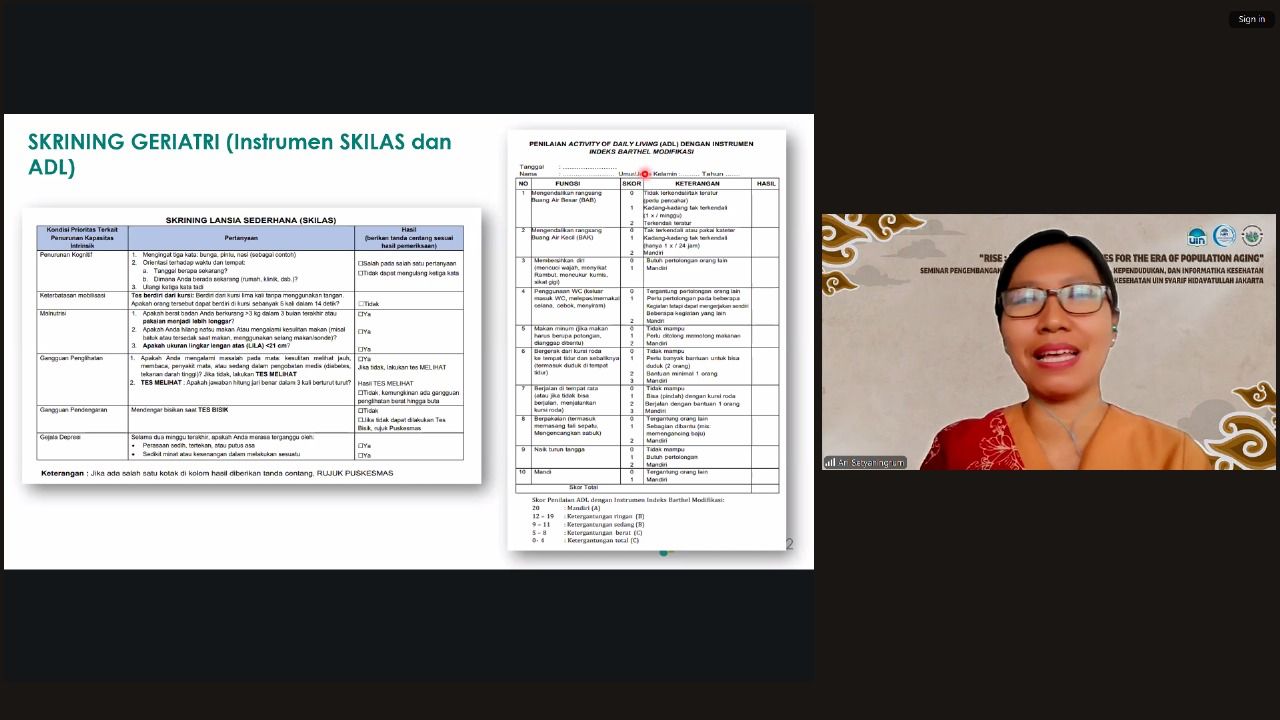
The next presentation was delivered by Dr. Ari Setyaningrum, Sp.KO, Head of the Elderly Health Working Team, Ministry of Health of the Republic of Indonesia. The speaker encouraged participants to understand the health conditions of the elderly from a healthcare perspective. These issues include declining bodily functions, high rates of chronic diseases, and the need for routine screenings. To address these challenges, Dr. Ari outlined government policies that regulate standards for elderly care in community health centers (Puskesmas) and hospitals. He emphasized that instruments such as the SKILAS (Skills for Elderly Development) and ADL (Age-Based Development) are crucial tools for assessing the physical capacity and independence of the elderly, leading to their care needs. He also emphasized the need to strengthen elderly-friendly services, both at the primary and referral levels. His presentation concluded with an explanation of the government's targets in the 2025-2029 National Medium-Term Development Plan (RPJMN), which focus on increasing the number of independent elderly and expanding national screening coverage.
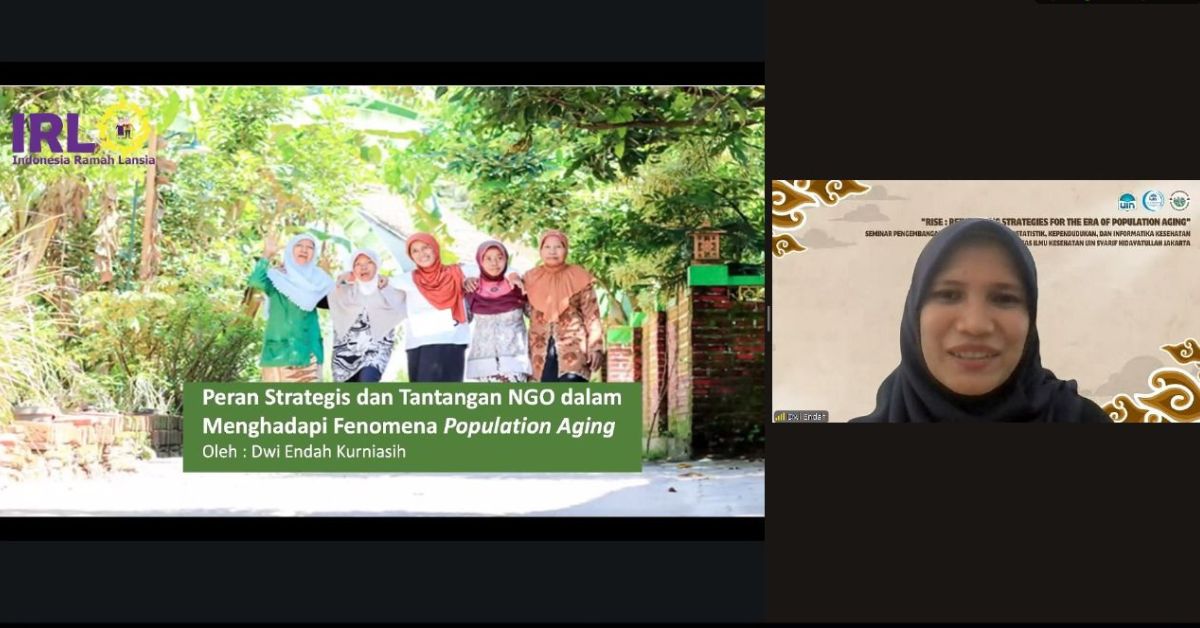
The final session was delivered by Dwi Endah Kurniasih, MPH, Executive Director of Indonesia Ramah Lansia (Elderly Friendly Indonesia), who emphasized the importance of creating a supportive social environment for the elderly. For him, the health of the elderly is not only dependent on medical intervention but also on a safe, accessible environment that allows them to remain engaged in social activities. He encouraged participants to consider the concept of "Elderly-Friendly Indonesia" as an effort to build an inclusive living space for the elderly.
The seminar, which lasted approximately four hours, was very active with participant participation. A variety of questions arose and enriched the discussion, especially when participants attempted to connect the research findings presented at the beginning of the event with the material presented by the speakers, creating a lively and relevant dialogue. At the conclusion of the event, the committee expressed their hope that the seminar would broaden participants' understanding of strategies for dealing with an aging population and encourage broader involvement from various parties in realizing a more prepared and friendly Indonesia for the elderly. (YY)