
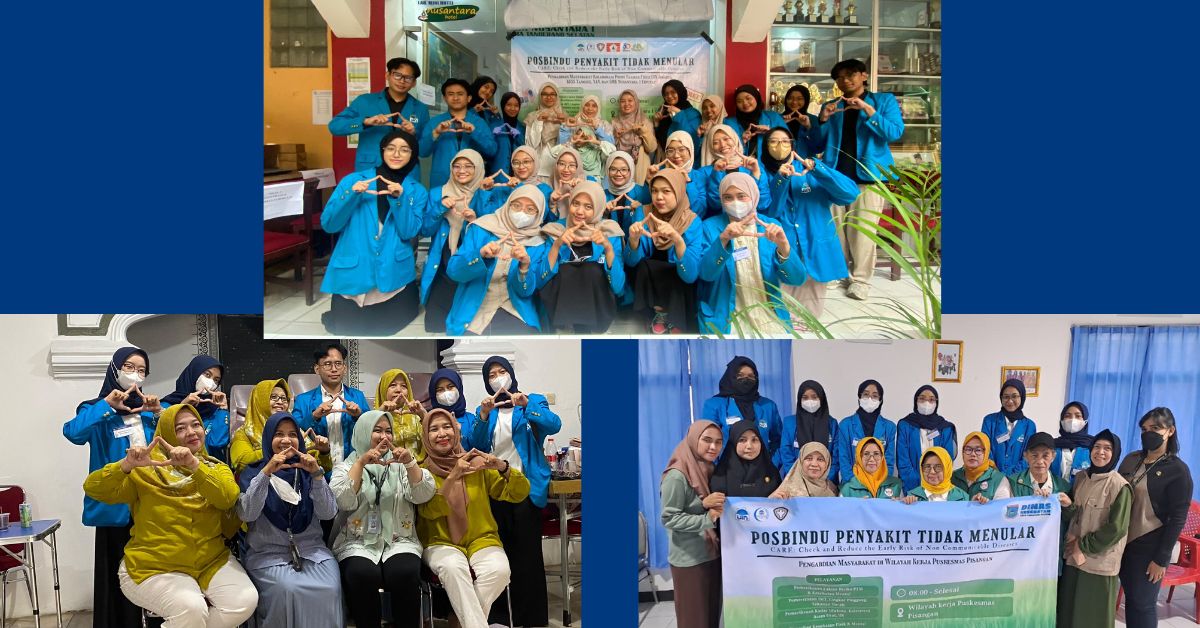
The Public Health Study Program Holds a Non-Communicable Disease Posbindu for Communities in the Pisangan Subdistrict Area
FIKES Online News - The Public Health Study Program of the Faculty of Health Sciences (FIKES) at UIN Syarif Hidayatullah Jakarta recently held a Community Health Post (Posbindu) for Non-Communicable Diseases (NCDs) for the community in Pisangan Village, South Tangerang City. The Community Health Post (Posbindu) was held twice: on Saturday (November 8, 2025) at the Soka and Embun Posbindu in Pisangan Village, and on Sunday (December 21, 2025) at SMK Nusantara 1 Ciputat, South Tangerang City. This activity integrates the Tridharma of Higher Education in community service and provides field practice for fifth-semester students taking the Disease Screening and Early Detection Practicum course.
The Community Health Post (Posbindu) is an annual event aimed at the entire community surrounding the Faculty of Health Sciences at UIN Syarif Hidayatullah Jakarta as a first step in identifying personal health conditions and instilling awareness of the importance of healthy lifestyles. With the theme CARE (Check and Reduce the Early Risk of Non-Communicable Diseases), this activity focused on preventing non-communicable diseases (NCDs) and improving mental health from an early age. The Community Health Post (Posbindu) activity, held on November 8, 2025, was attended by a total of 44 participants, the majority of whom were elderly. Meanwhile, the Community Health Post (Posbindu) activity held on December 21, 2025, was attended by a total of 70 participants, consisting of teachers and students from SMK Nusantara 1.
Through this activity, participants received comprehensive health checks, including interviews regarding risk factors for non-communicable diseases (NCDs), mental health assessments, anthropometric measurements such as height, weight, and waist circumference, blood pressure checks, and simple laboratory tests covering hemoglobin levels, total cholesterol, blood sugar, and uric acid levels. These tests were then followed by consultations regarding the results.
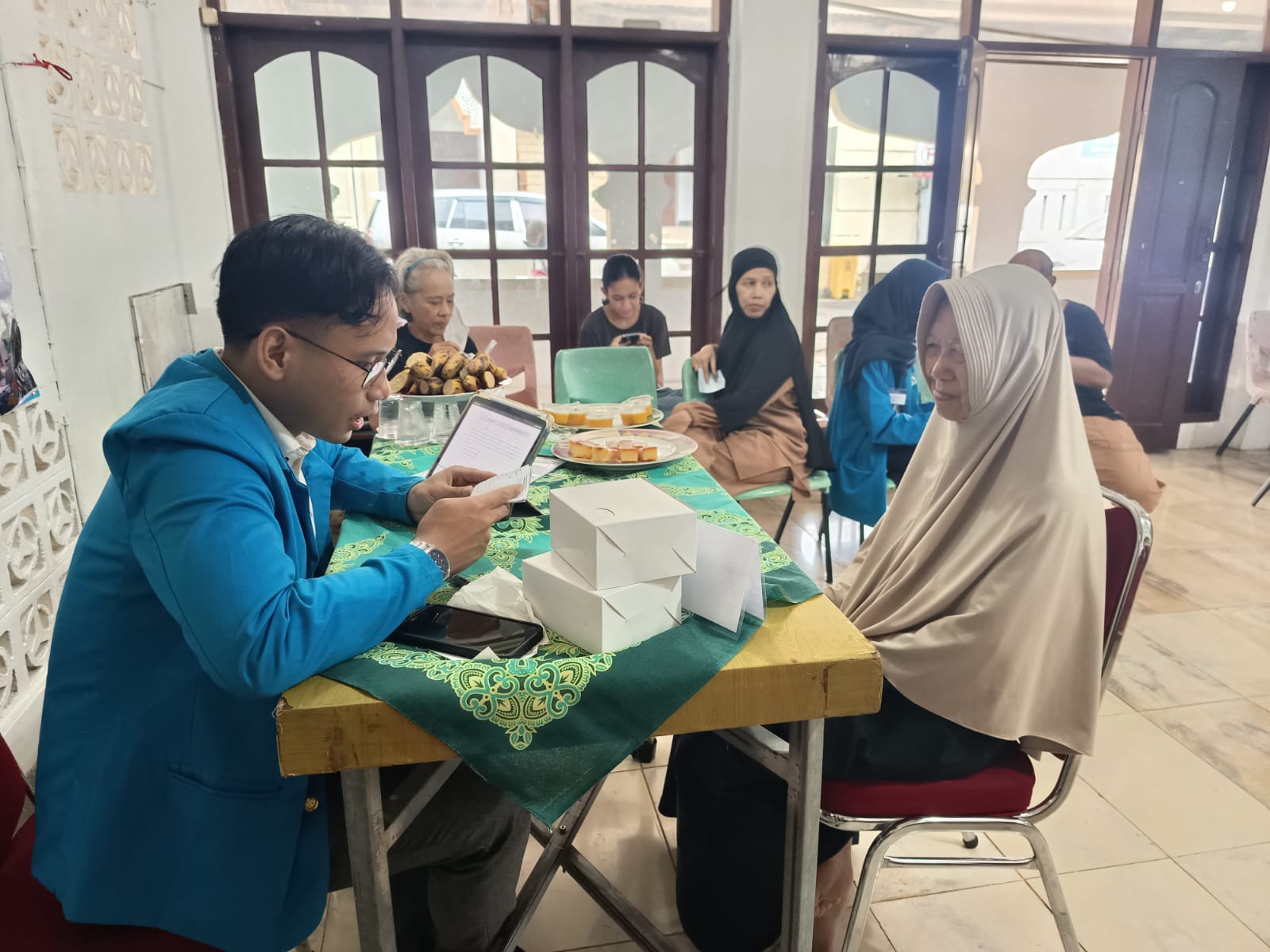
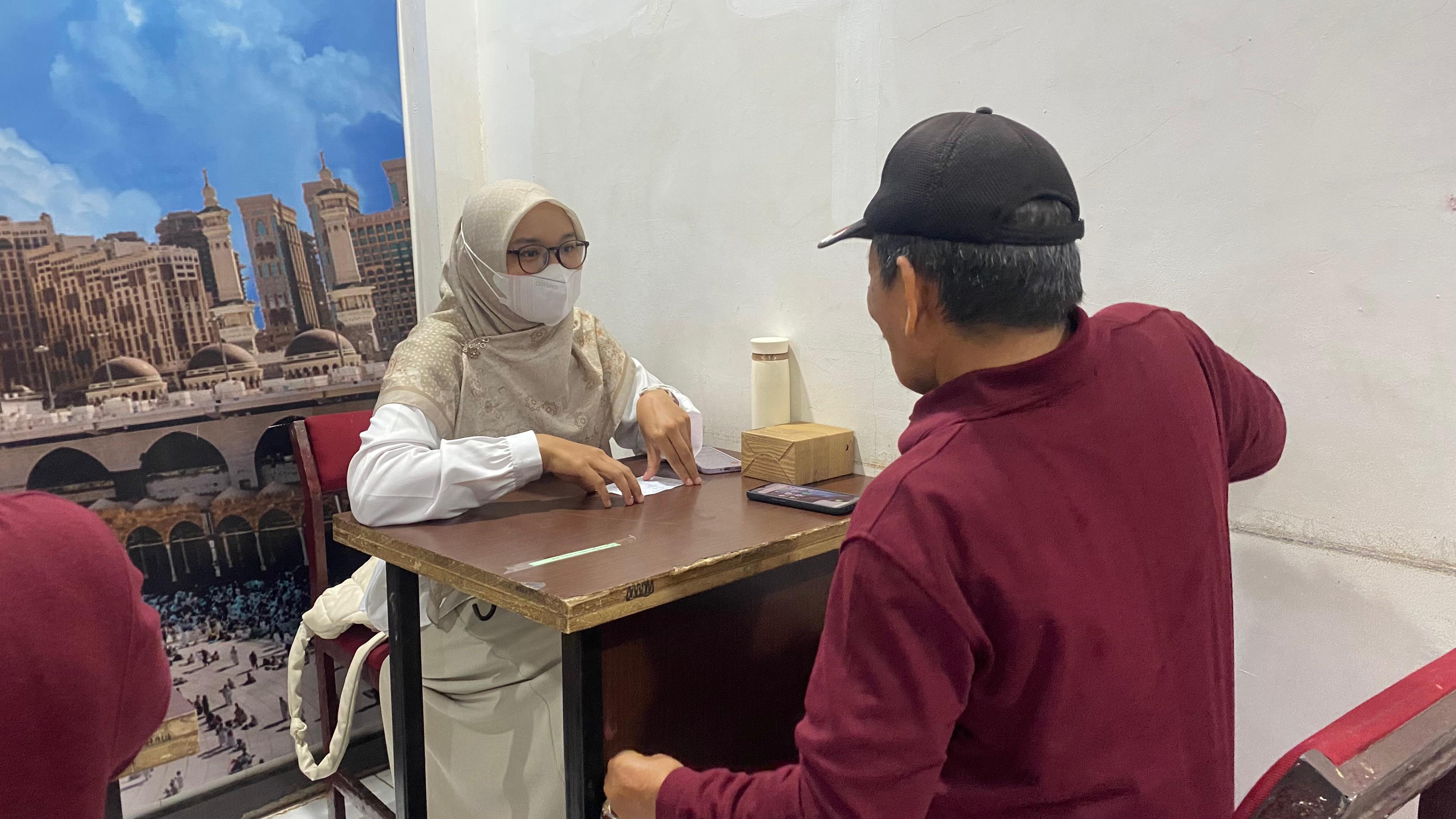
Community-based Posbindu activities began at 6:00 a.m. with the committee preparing supplies and necessities to ensure the smooth running of the Posbindu. Participants began arriving at 8:00 a.m. WIB (Western Indonesian Time). The event proceeded in an orderly and systematic manner. Participants were directed to fill out a Google registration form if they had not already completed the registration link, which had been previously published through the media. After passing through the registration desk, participants were directed to table 1 for interviews on non-communicable disease (NCD) risk factors and mental health risk factors.
The interviews were conducted using different methods at each location. At the Posbindu activities at the Soka and Embun Posbindu Posbindu, interviews were conducted using printed interview forms, which were then completed under direct supervision and monitoring by the committee. Meanwhile, at the Posbindu activities at SMK Nusantara 1, interviews were conducted independently using Google Form barcode scanning, with continued assistance and monitoring by the committee.
The next stage is table 3, which measures participants' physical condition. At this stage, body weight (BW), height (HB), and waist circumference (LIPI) are measured to obtain a general overview of the participants' anthropometric status. After all measurement data is collected, the committee immediately calculates their Body Mass Index (BMI) using the weight and height measurements.
In the next stage, participants are directed to the blood pressure measurement table as part of a series of physical examinations. Blood pressure measurements are performed to assess the condition of the heart and blood circulation, by recording systolic and diastolic pressure values.
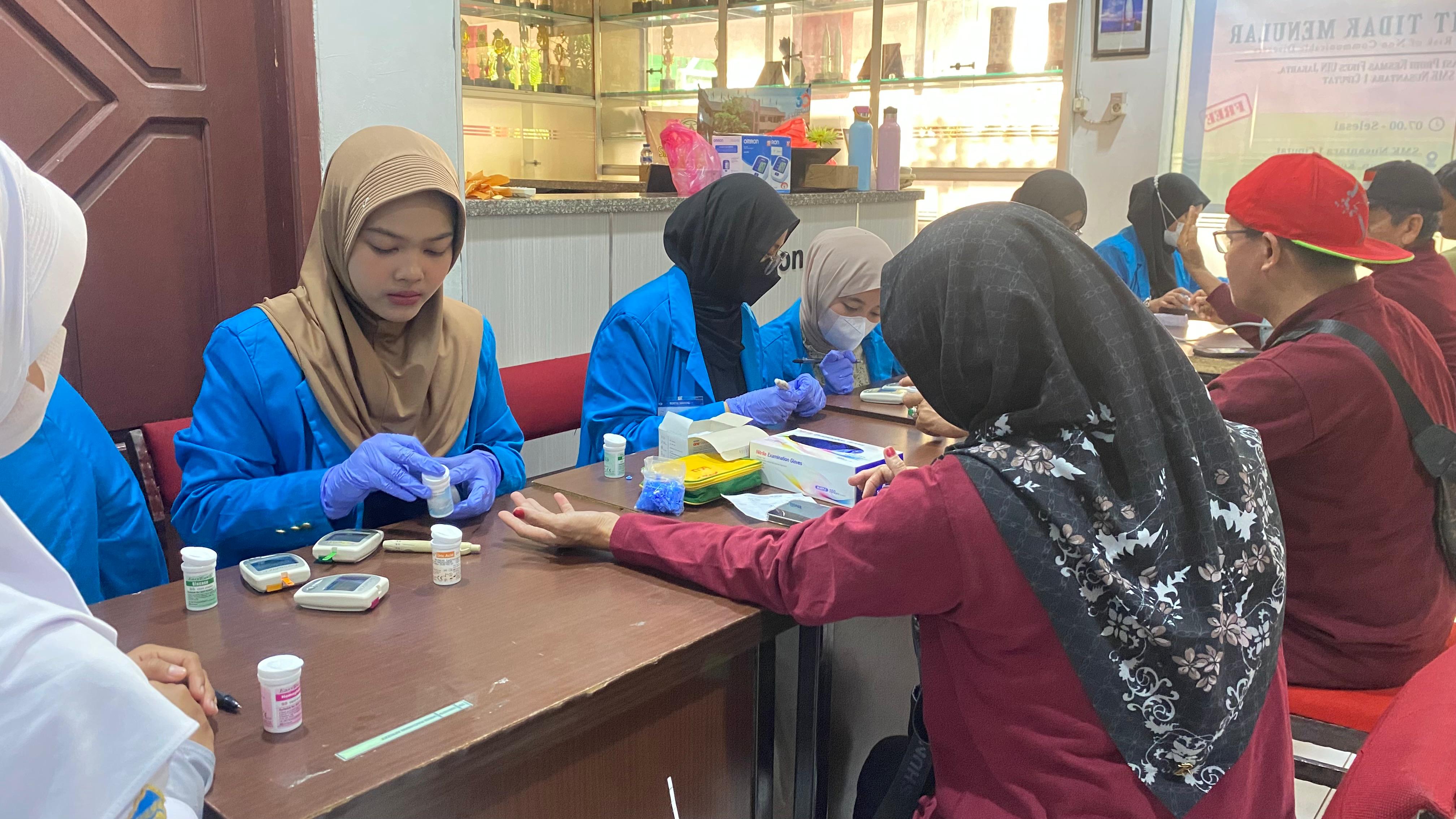
The next stage is table 4, which is the simple laboratory examination section. At this stage, participants undergo a series of tests that include measuring blood glucose, hemoglobin (Hb), cholesterol, and uric acid levels. This examination aims to assess their health status in more depth, particularly in the early detection of the risk of non-communicable diseases (NCDs) such as diabetes mellitus, anemia, hypercholesterolemia, and gout.
As a final step, participants are directed to table 5, which is the table for consultations on examination results and health education. At this stage, participants received a comprehensive explanation of the results of their examinations, including interviews regarding risk factors for non-communicable diseases and mental health, as well as physical and laboratory examinations.
A team of consultants, consisting of epidemiology students and a team of public health lecturers, assisted participants in interpreting the test results, identifying risk factors, and providing preventive and promotive advice tailored to each participant's individual circumstances. Participants also received education on healthy lifestyles, including the importance of maintaining a balanced diet, regular exercise, and stress management. Furthermore, the consultant team provided recommendations for follow-up (referrals) for more detailed examinations to health facilities if any of the participant's test results indicated a risk of non-communicable diseases or mental health disorders. The Community Health Post (Posbindu) activity, attended by 114 participants, is expected to serve as an educational tool for the community to understand their health status. (YY/ZR)