
UIN Jakarta Public Health Students Take Action Against Tuberculosis at Pondok Ranji
FIKES Online News - The Pondok Ranji Village area, East Ciputat District, South Tangerang City, is where Public Health students from UIN Syarif Hidayatullah Jakarta demonstrated that learning doesn't stop in the classroom. The Field Learning Experience (PBL), which began on January 9th, enabled the students to directly engage with the community with a single focus: tuberculosis (TB).
Based on a situational analysis of the Pondok Ranji Community Health Center (Puskesmas), the students discovered that there were only two TB cadres actively assisting the community in Pondok Ranji Village. This situation demonstrates the significant challenge of TB control in Pondok Ranji Village. Therefore, the students innovated by designing three integrated intervention programs: WATCH OUT FOR TB, FIELD FOR TB, and COMPLY WITH TB. The entire program was implemented by Group 1 of the PBL (Public Health) Program in the Public Health Study Program, Faculty of Health Sciences, Syarif Hidayatullah State Islamic University Jakarta, consisting of Dinda Azizah Atallahsyah, Lovita Zahra, Nasywa Alya Salsabila, Shira Aurelia Azra, Nadya Qisthi Amalia, Rifka Intan Syuhada, and Zahra Abdi Riana, under the guidance of Mrs. Riastuti Kusuma Wardani, M.K.M., Ph.D.
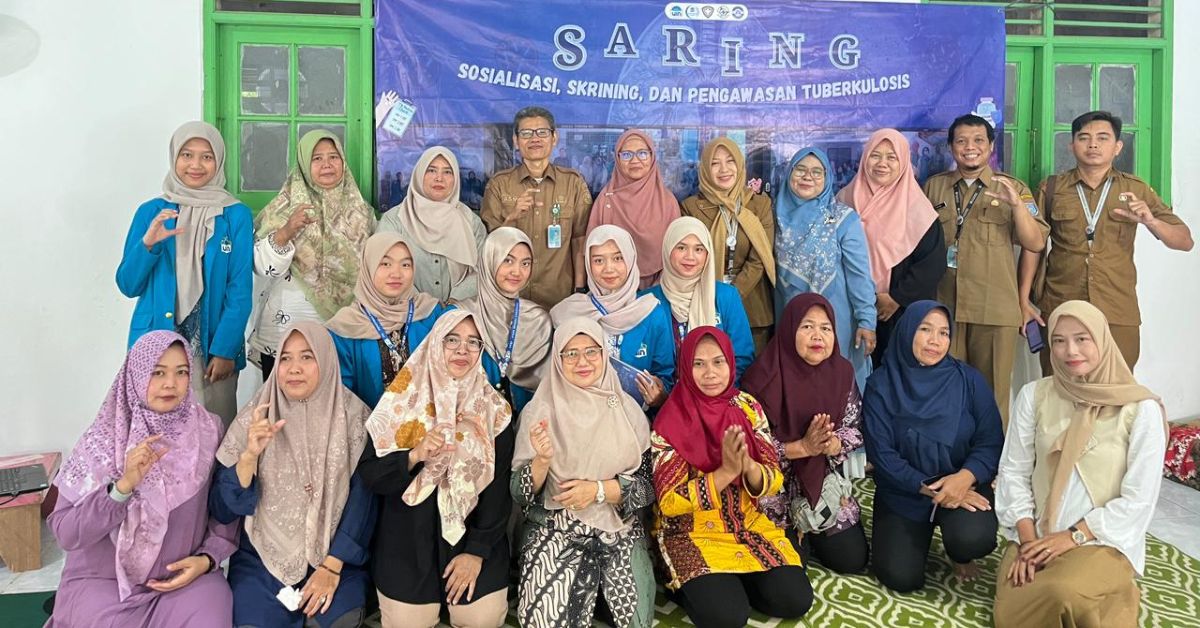
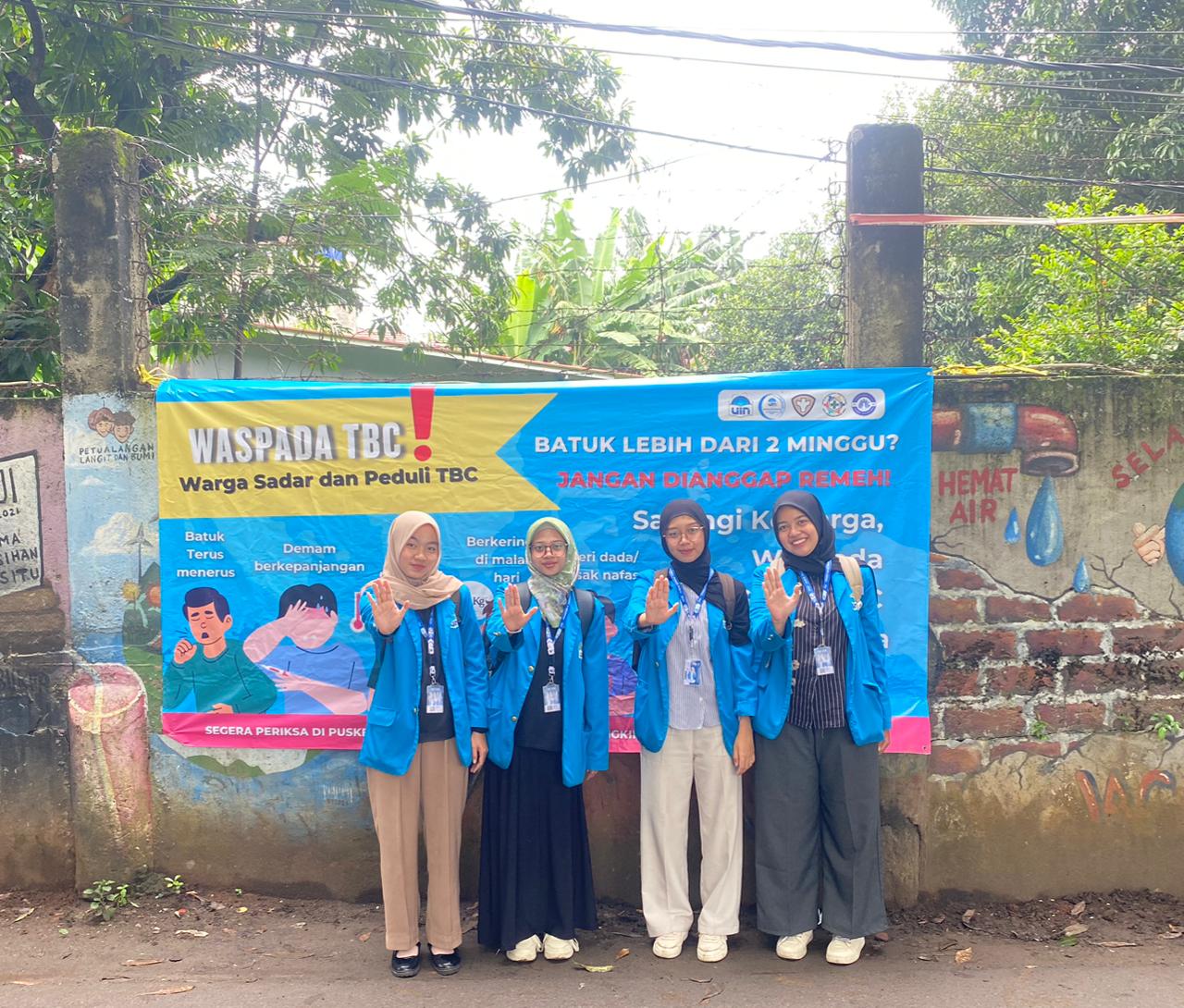
The WASPADA TBC (Citizens Aware and Caring About TB) program was the first step in building public awareness. By installing banners at strategic locations, students ensured that TB prevention messages were communicated directly to the community. Public awareness was further strengthened through SARING TBC (Socialization of Tuberculosis Screening and Surveillance) held on Tuesday, February 3, 2026, at the Majelis Ta'lim Baiturrahim, RW 006.
The event was attended by Posyandu (Integrated Health Post) cadres, TB cadres, and representatives from sub-districts and community health centers (Puskesmas). During the session, Mrs. Riastuti Kusuma Wardani, M.K.M., Ph.D., stated that Indonesia still has the second-highest TB case rate in the world. She also emphasized that TB is not a curse and does not recognize social status.
"TB can be prevented and controlled if treated early, and cadres play a key role as agents of change in the community," she stated to the cadres.
TBC screening became even more meaningful with students introducing the PATUH TBC (TBC Prevention Therapy Assistance and Monitoring) Guidebook. This book is presented as a tool to assist cadres and patient families so that TPT can be carried out regularly and according to recommendations. Its contents include basic TB material, explanations of TPT, medication consumption guidelines, and a medication adherence monitoring sheet.
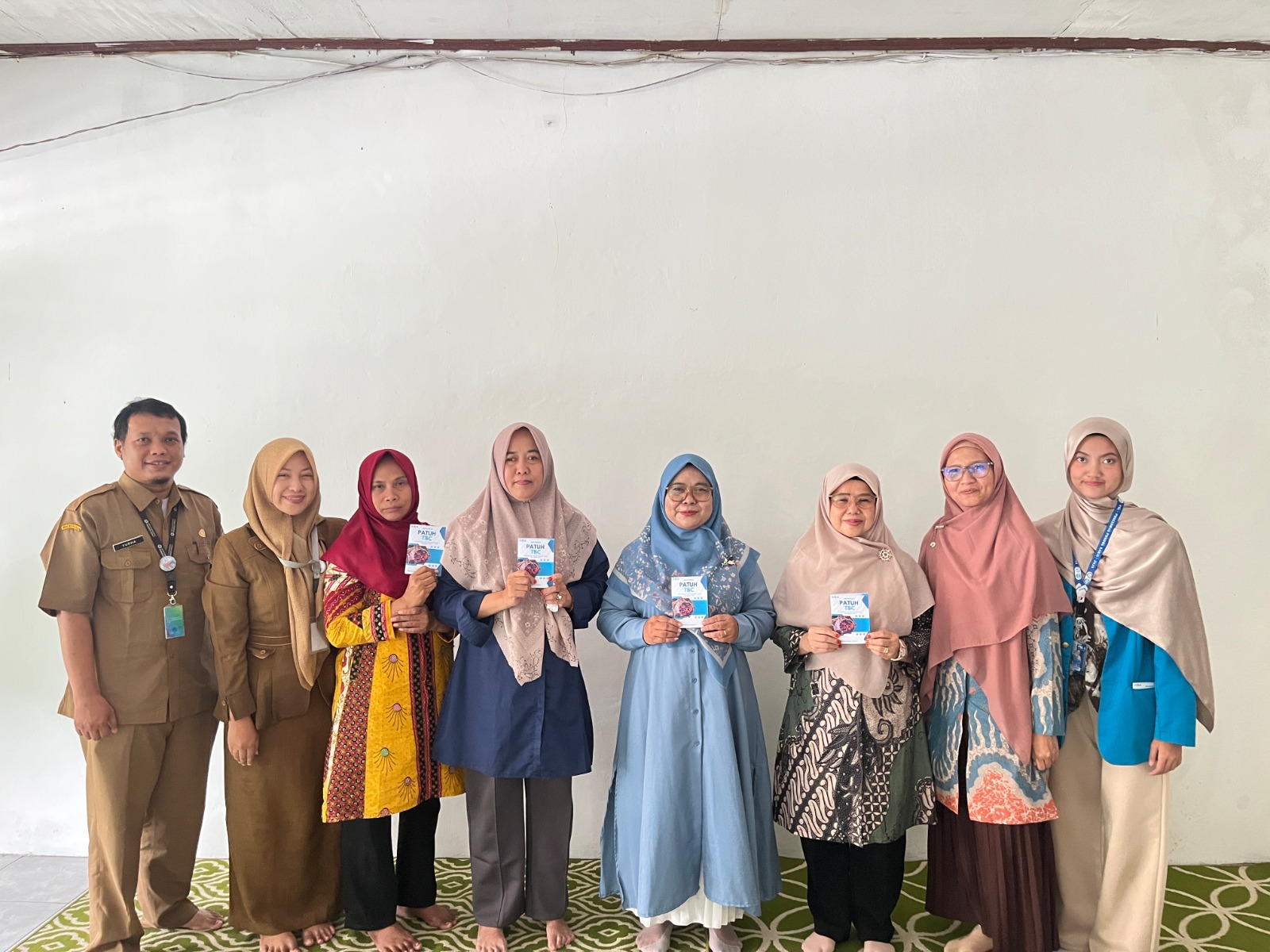
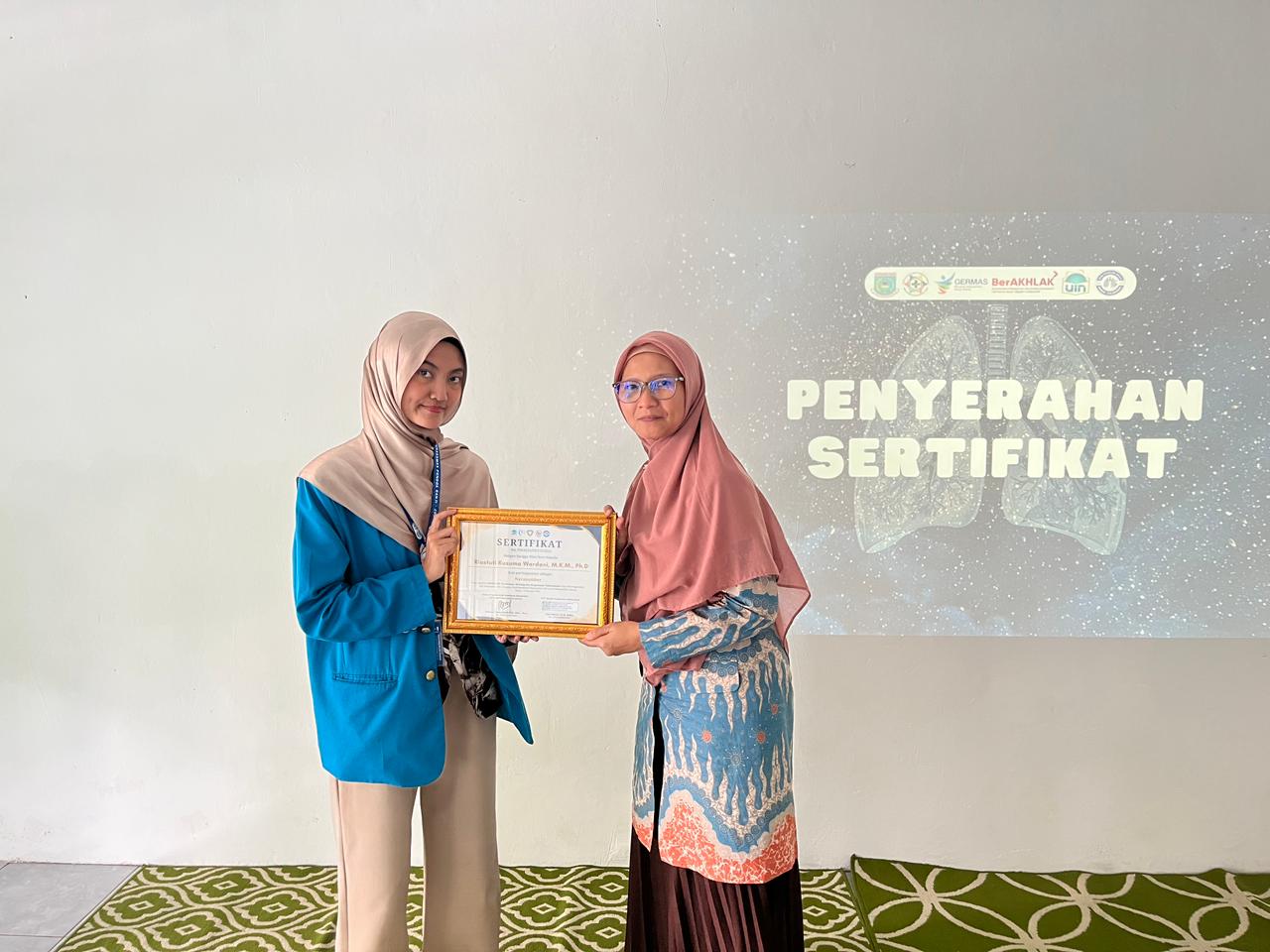
The cadres acknowledged the significant benefits of the PATUH TBC (Compliance with TB) Handbook and the SARING TBC (TBC Screening) activity, particularly the sharing session that opened up opportunities for exchanging field experiences. The cadres' enthusiasm was evident throughout the activity, with the hope that the handbook could be used routinely to assist TB patients in their area. Support also came from the village administration. Mr. Asmin, a representative of the Pondok Ranji Village, expressed his appreciation and full support for the intervention program implemented by the students. He even shared his personal experience as a TB survivor and emphasized the importance of medication adherence. He stated that non-compliance with treatment only prolongs suffering and risks having to start treatment all over again.
More than simply fulfilling an academic obligation, this PBL (Public Learning Learning) has become a learning space for empathy, collaboration, and social responsibility. From the banners displayed, the lively discussions, to the handbook now in the hands of the cadres, the students and the Pondok Ranji community are working together to address TB. Slowly but with hope, change always begins with caring at the level closest to residents' lives. (PBL Group 1)